
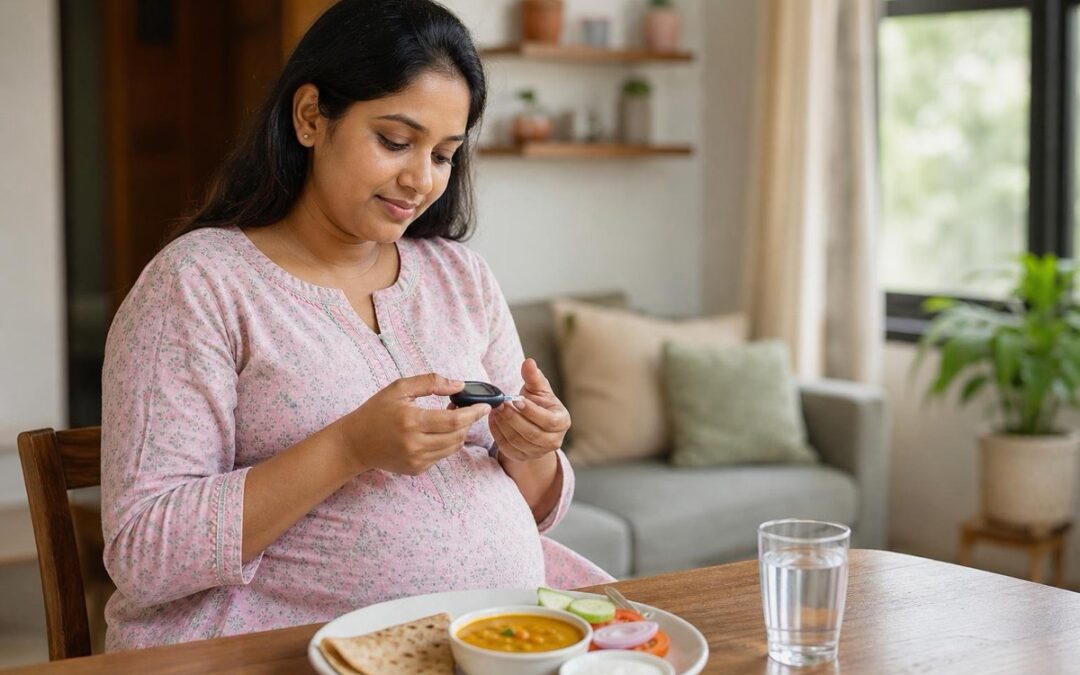
Quick answer: Gestational diabetes is high blood sugar that develops during pregnancy, usually in the second half. It’s very common in Indian women, often causes no symptoms, and is picked up by a glucose test. Most women control it with diet changes and walking; some need medicine or insulin. With good control, the vast majority have healthy babies, and sugar levels usually return to normal after delivery.
“But I’ve never had sugar in my life, Doctor. How can I have diabetes now?”
We hear this often in our Panchkula clinic, usually from a healthy, worried mother-to-be holding her glucose test report. Gestational diabetes can happen to anyone, and Indian women are at noticeably higher risk than many other groups. The reassuring part is that it’s very manageable.
What Is Gestational Diabetes?
During pregnancy, hormones from the placenta make the body less responsive to insulin, the hormone that keeps blood sugar in check. Most women make extra insulin to compensate. When the body can’t keep up, blood sugar rises. That’s gestational diabetes mellitus, or GDM.
It usually appears around 24 to 28 weeks, though in India many doctors test earlier because of the higher risk.
Who Is at Higher Risk?
- South Asian ethnicity (which includes most Indian women)
- Being overweight before pregnancy
- Family history of diabetes
- Age over 30
- Gestational diabetes in a previous pregnancy
- A previous baby weighing more than about 4 kg
- PCOS
Because the risk is high in India, testing is recommended for all pregnant women, not just those with risk factors.
How Is Gestational Diabetes Diagnosed?
In India, a common approach is a glucose challenge test: you drink 75 g of glucose and blood sugar is checked two hours later. Some doctors use a fasting test followed by a glucose drink with several readings. Your doctor may test in the first trimester and again between 24 and 28 weeks.
Symptoms of Gestational Diabetes
Most women have no symptoms at all, which is why testing matters. Some notice increased thirst, passing urine more often or tiredness, but these are common in normal pregnancy too.
Why Does It Matter?
Uncontrolled high sugar can lead to:
- A larger-than-average baby, which can make delivery harder and raise the chance of caesarean section
- Low blood sugar in the baby after birth
- High blood pressure and pre-eclampsia in the mother
- Higher risk of type 2 diabetes for mother and child later in life
Good control dramatically lowers these risks.
How Is Gestational Diabetes Treated?
1. Diet changes
This is the foundation. You don’t need to starve; you need to spread carbohydrates sensibly:
- Three moderate meals and two to three small snacks, rather than large meals
- Replace white rice and maida with whole wheat, multigrain atta, millets (bajra, jowar, ragi) and brown rice in moderate portions
- Include protein at every meal: dal, paneer, curd, eggs, chicken, sprouts
- Plenty of vegetables and salads
- Avoid sweets, mithai, sugary chai, fruit juices and packaged snacks
- Whole fruits in small portions, not juices
A dietitian can tailor a plan to your routine.
2. Walking
A 10 to 15 minute walk after each meal noticeably lowers sugar levels, unless your doctor has advised rest.
3. Monitoring
You’ll usually check sugar with a glucometer at home, fasting and after meals, and keep a record for your doctor.
4. Medicine or insulin, if needed
If diet and exercise aren’t enough, your doctor may prescribe tablets or insulin. Insulin is safe for the baby and is nothing to fear; it’s often needed only for the rest of the pregnancy.
Delivery and After
Most women with well-controlled GDM can aim for a normal delivery. The timing and mode of delivery depend on sugar control and the baby’s growth. Babies’ sugar levels are checked after birth.
For most women, sugar returns to normal after delivery. But GDM is a warning sign for type 2 diabetes later, so a glucose test about 6 to 12 weeks after delivery, and regularly after that, is important. Breastfeeding and staying active also help lower that future risk.
Gestational diabetes is one of the conditions we look after as part of high-risk pregnancy care.
Frequently Asked Questions
Can gestational diabetes harm my baby?
Uncontrolled sugar can affect the baby’s growth and blood sugar after birth. With good control, most babies are perfectly healthy.
Will I have diabetes after delivery?
Usually not immediately. But your lifetime risk of type 2 diabetes is higher, so regular check-ups matter.
Can I eat fruit with gestational diabetes?
Yes, in small portions with meals. Prefer whole fruits like guava, apple, pear and orange over juices.
Is normal delivery possible with gestational diabetes?
Yes, many women with well-controlled GDM have a normal delivery.
Can gestational diabetes be prevented?
Not always, but a healthy weight before pregnancy, a balanced diet and regular activity lower the risk.
If you’ve been told you have gestational diabetes, or you’re planning a pregnancy and want to reduce your risk, book a consultation with Dr Deepika Arora at Dr Deepika’s Maternity & Fertility Centre, Sector 5, MDC Panchkula.
Recent Comments